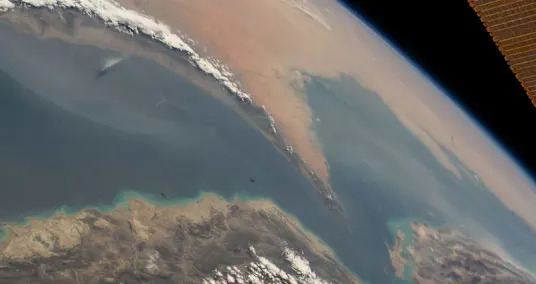
Iran has agreed to allow additional Pakistani-flagged vessels to pass through the Strait of Hormuz, Pakistan's foreign minister said on Saturday.
Foreign Minister Ishaq Dar said in a post on X that "the government of Iran has agreed to allow 20 more ships under the Pakistani flag to pass through the Strait of Hormuz."
"Two ships will cross the strait daily," he added.
Dar welcomed the decision as "a harbinger of peace" that "will help usher in stability in the region."
"Dialogue, diplomacy, and such confidence-building measures are the only way forward," the minister, who also serves as deputy prime minister, said.
Pakistan shares an around 900-kilometre-long border with Iran and has emerged as a mediator amid rising fears that the US-Israeli war with Iran could continue to spread to the wider region.
The announcement came hours ahead of a planned meeting of top diplomats from Saudi Arabia, Turkey and Egypt scheduled to take place in Islamabad on Sunday and Monday.
The foreign ministers of Egypt and Turkey arrived in the Pakistani capital on Saturday.
Meanwhile, Dar said he had held a telephone conversation with his Iranian counterpart, Abbas Araghchi, during which he emphasized the need for de-escalation, stressing that dialogue and diplomacy remain the only viable path to lasting peace.
"Pakistan remains committed to supporting all efforts aimed at restoring regional peace and stability," the minister said.





 Amid Iran war, 53 of Israel's future scientists showcase projects in Jerusalem contest
- The most effective method to Amplify Your Opportunity for growth in a Web-based Degree Program
- Russian drone slams into block of flats in deadly wave of strikes across Kyiv
- Hezbollah uses ambulances, paramedic uniforms, as disguise for terrorist activity, IDF says
- Aid sent by ambulance to Ukraine front line
- Extreme Manual for Picking a Camper Van
- The most effective method to Go Down Abundance through Ages with Disc Rates
- Before Cheap Cars Were Common, This Fiat Changed Everyday Life for Millions
- Flu illness count nears 5 million, with New York City among the hardest hit